Clean Up Your CRM Before the End of the Year
Your CRM is supposed to make running your business easier.
But if you’ve been using it all year without much maintenance, there’s a good chance it has picked up some clutter along the way.
Duplicate contacts. Old leads. Missing information. Inconsistent tags. Opportunities sitting in stages they should have left months ago.
None of those things seem particularly urgent when you’re busy in the day to day. But eventually, all that messy data makes your CRM harder to trust and harder to use.
The end of the year is a great time to clean things up so you’re starting January with better information and a system you can actually work from.
Here are some of the places I’d start.
1. Deal With Duplicate Contacts
Duplicates are one of the easiest ways for a CRM to get messy.
The same person might be entered twice with different email addresses, added by different people or imported more than once from separate lists.
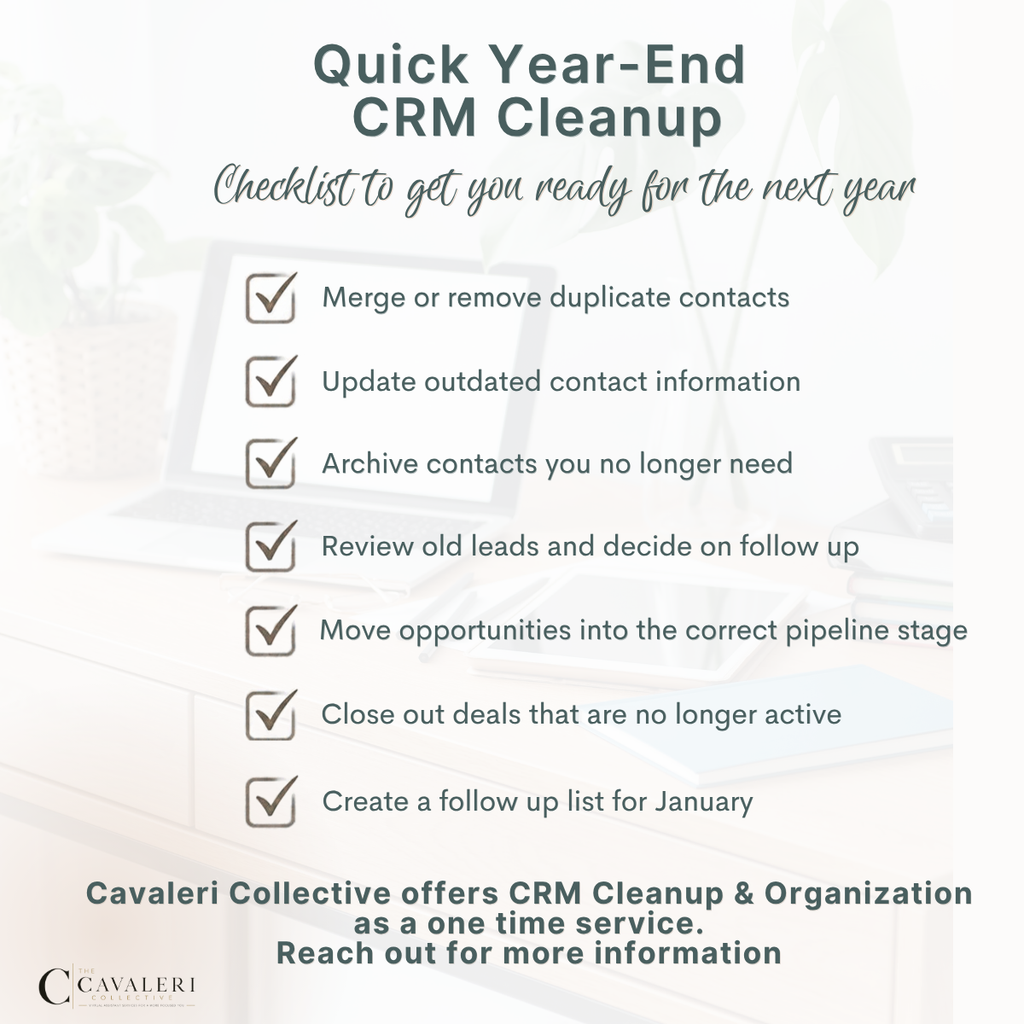
Review your duplicate records and merge or remove them where appropriate.
The goal isn’t simply to have fewer contacts. It’s to have one accurate record for each person or business whenever possible.
2. Update Outdated Contact Information
People change jobs. Businesses close. Email addresses change.
Look for contacts with outdated or incomplete information and update what you can.
Pay particular attention to the contacts you actually plan to reach out to next year. There’s not much value in starting a January campaign with information you already know isn’t accurate.
3. Review Your Old Leads
This is one of my favorites because old leads don’t necessarily mean bad leads.
Look through prospects who never became clients.
Some may no longer be relevant and can be archived.
Others may simply have reached out at the wrong time.
Those are the people you may want to put on a nurture or follow up list for the new year rather than leaving them forgotten in your CRM.
4. Clean Up Your Pipeline
Take a look at every opportunity currently sitting in your pipeline.
Is it actually still active?
If something has been sitting in the same stage for six months with no communication, it probably shouldn’t still be considered an active opportunity.
Update stages, close out dead opportunities and identify anything that genuinely needs follow up.
Your pipeline should tell you what’s happening in your business now, not give you a history of everything that has ever happened.
5. Standardize Your Data
Take a look at how information is being entered.
You might have:
Massachusetts in one record.
MA in another.
Mass. somewhere else.
Or five different versions of the same service category.
Individually, these aren’t huge problems. But inconsistent data makes filtering, reporting and segmentation much more difficult.
Decide on a standard and start making your records consistent.
6. Review Your Tags
Tags tend to multiply.
You create one for a campaign. Someone creates another for a type of lead. Three months later there’s another tag that means almost exactly the same thing.
Before long, nobody knows which one to use.
Review your existing tags and ask:
Do we still use this?
Does another tag already do the same thing?
Would anyone on the team understand what this means without asking?
If the answer is no, it’s probably time to clean it up.
7. Fill In the Information You’re Actually Missing
You don’t need every possible CRM field completed for every contact.
Focus on the information that helps you run your business.
That could include:
Contact information
Company
Lead source
Service interest
Last contact date
Next follow up
Client status
Whatever information you decide is important, make sure you’re collecting it consistently.
8. Create a Follow Up List
Don’t just clean up your contacts. Do something with the information you find.
Create a list of people who should hear from you again.
That might include old prospects, previous clients, referral partners, networking contacts or people who expressed interest but weren’t ready to move forward.
Now you’re turning CRM cleanup into potential business development for the new year.
9. Decide What You Want Your CRM to Do Next Year
This is the part people often skip.
Once you’ve cleaned everything up, think about how you actually want to use your CRM going forward.
Maybe you need a better nurture process.
Maybe leads need clearer stages.
Maybe you need better tags.
Maybe you need to consistently track where leads are coming from.
Or maybe your biggest goal is simply getting everyone to use the system the same way.
A cleaner CRM gives you the opportunity to create better habits instead of recreating the same mess next year.
You Don’t Have to Clean It Up Yourself
CRM cleanup is exactly the kind of project that business owners know needs to happen but rarely have time to sit down and do.
That’s why Cavaleri Collective offers CRM Cleanup & Organization as a one time project.
I can help with contact cleanup, duplicate records, data standardization, tagging, pipeline organization and the general clutter that’s making your CRM harder to use.
The goal is simple:
A CRM you can actually work from.
And you don’t need to sign up for ongoing virtual assistant services to get it done.
Ready to get your CRM organized before the new year?